Article
Why Feature Cost and ROI Need Real Time Spent — Not Just Effort Estimates
Story points and effort estimates help you plan; actual time logged per Jira issue — rolled up across hierarchies and links — tells you what a feature really cost.
June 25, 2026 · 8 min read
Every product organization estimates work. Story points, t-shirt sizes, hours-to-complete — the language changes, but the intent is the same: predict effort before you build. Estimates are essential for planning. They are not sufficient for understanding what a feature actually cost or whether it delivered a real return.
Estimates answer a planning question, not a finance question
An effort estimate tells you how hard the team expects a feature to be. It does not tell you how much time developers, QA, designers, analysts, and tech writers actually spent across the full delivery lifecycle.
Features are rarely built by one role in one sitting. When you only track estimates, you know what you intended to spend — not what you spent. Feature cost and ROI stay theoretical.
Real feature cost includes every party involved
A feature's true cost is the sum of time from everyone who touched it: implementation, code review, testing, bug fixes, design iteration, product clarification, documentation, and release support.
If only development time is visible, product and engineering leaders make ROI decisions on a partial picture. QA rework, integration surprises, and cross-team support can silently dominate cost while estimates still look healthy.
Time spent per issue is the bridge between Jira and business value
When teams log time against Jira issues — consistently and at the feature or epic level you care about — you can roll hours up to initiatives, epics, and releases. That turns Jira from a task tracker into a delivery ledger.
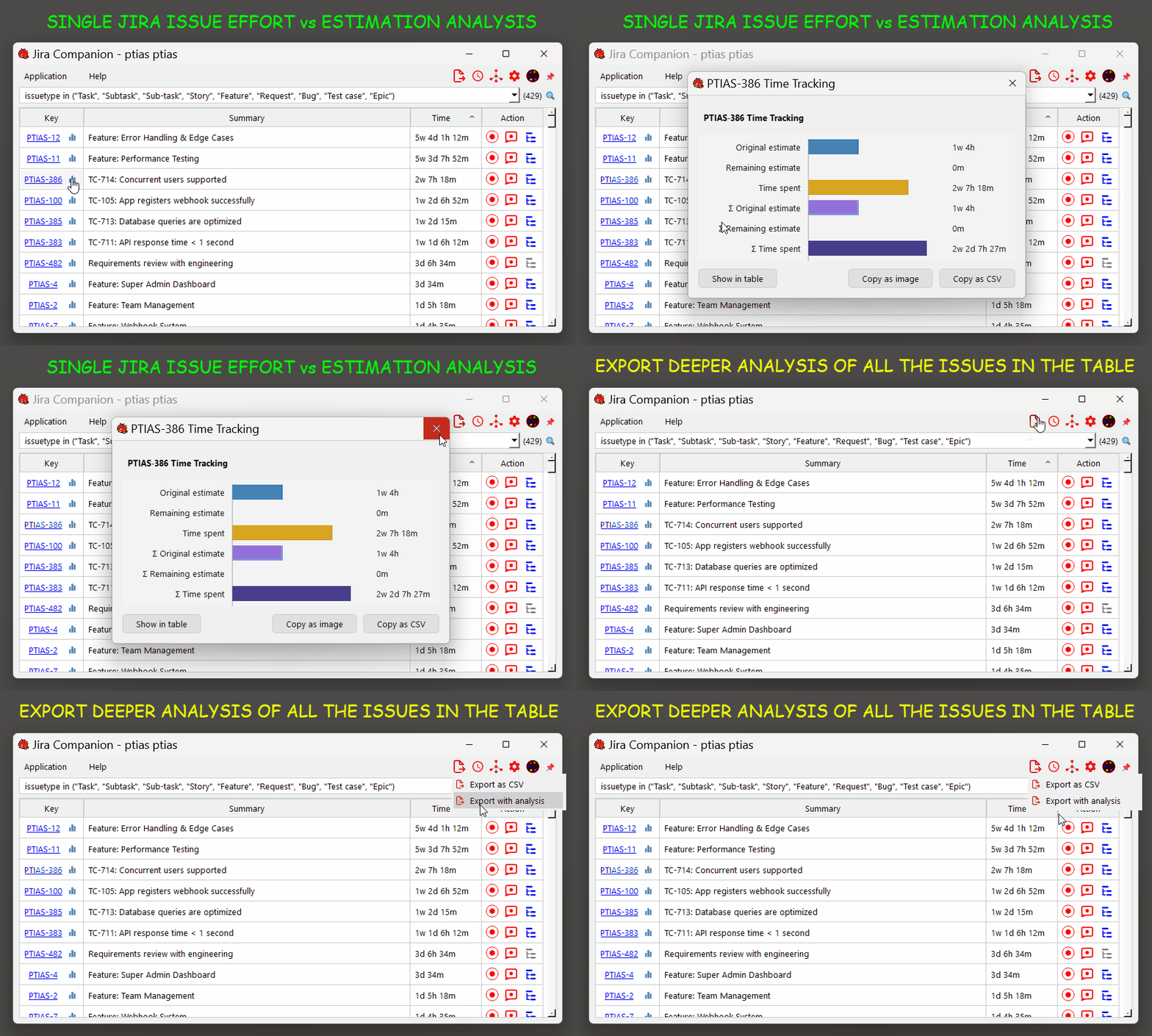
Compare estimated effort to actual time spent and patterns emerge: which work types overrun, which teams absorb hidden cost, and which feature shapes are expensive to maintain. Those insights do not come from estimates alone.
ROI is only real when numerator and denominator are real
Return on investment compares value delivered to cost incurred. Revenue, retention, or efficiency gains might be the return. Cost must be grounded in actual spend — not a planning number from three months ago.
Without real time data, ROI slides and roadmap reviews default to opinion. With real time data, you can ask sharper questions: Did this epic repay the hours we invested? Should we fund more work like this — or less?
Track real time per Jira issue — roll it up across hierarchies and links
With the PTIAS desktop application, you can track real time spent on each Jira issue — regardless of where that issue sits in your hierarchy. Whether someone is working on a story, task, bug, sub-task, epic, or any other issue type, they log time on the issue they are actually doing right now.
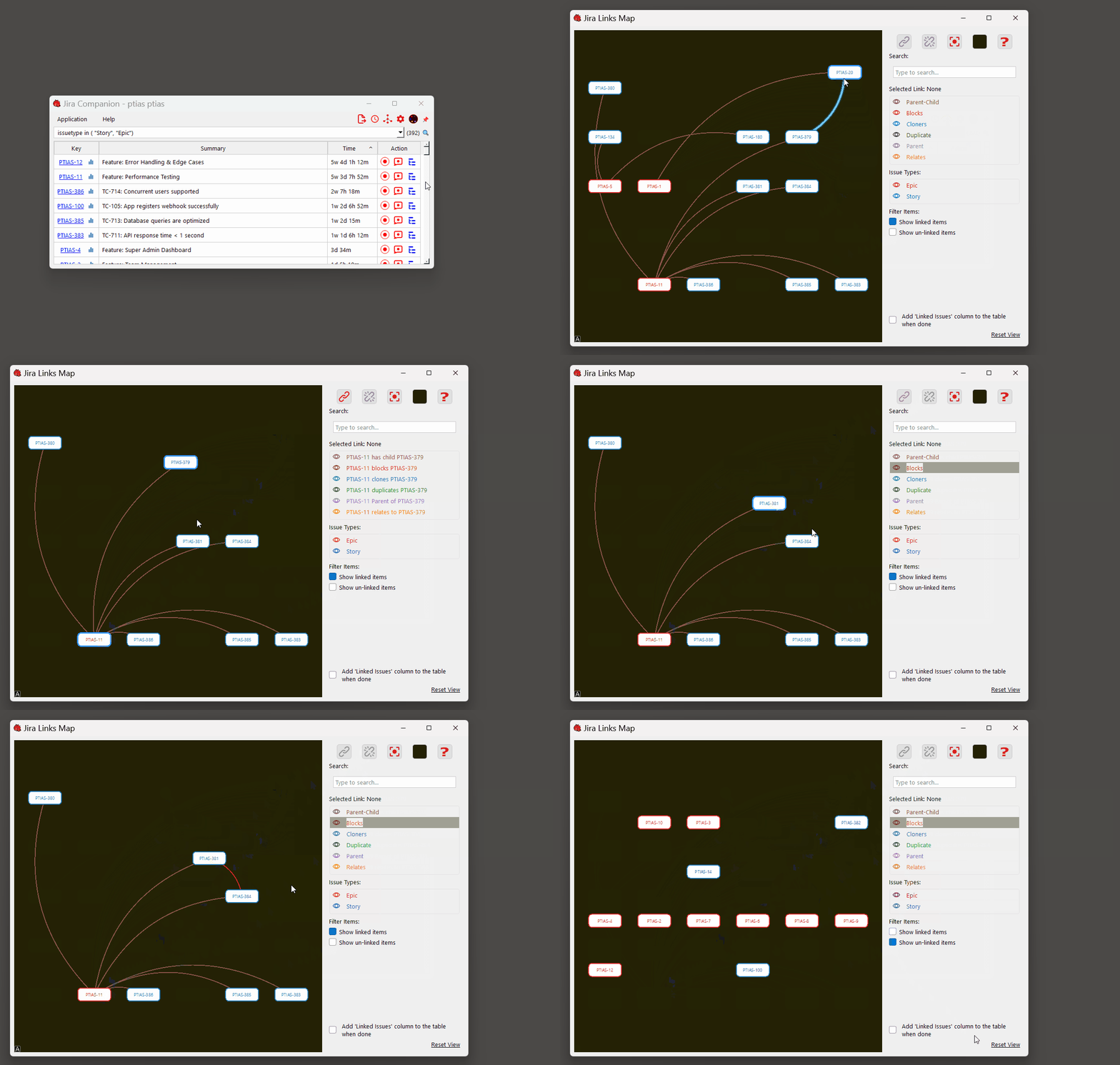
PTIAS accumulates that time according to the hierarchies and links between Jira issues. Hours logged on child issues roll up to parents and epics; work connected through Jira links is part of the same picture, not only parent-child relationships. You see how effort builds across the structure your team already uses in Jira.
That is how isolated worklogs become true feature cost: every party's real hours, aggregated the way your delivery model is already modeled — so ROI discussions are grounded in what was spent, not just what was estimated.
Make logging time part of the delivery habit
The barrier is rarely philosophy; it is friction. The PTIAS desktop app ties time tracking to Jira issues — with reminders, admin policy, and reporting — so capture stays practical without pulling people out of flow.
Accurate worklogs do not replace estimates. They complete the picture estimates start. Together they support planning today and accountable product decisions tomorrow.
From estimation theater to accountable delivery
Effort estimates help teams negotiate scope. Real time spent by each party involved — tracked per issue and rolled up across hierarchies and links — reveals what features actually cost. That is the foundation for honest feature cost, credible ROI, and a portfolio you can steer with data.
PTIAS connects Jira PI Planning and desktop time tracking so capacity is visible during planning and actual effort is captured during delivery — closing the loop between what you commit to and what you spend.